
Previous
Next
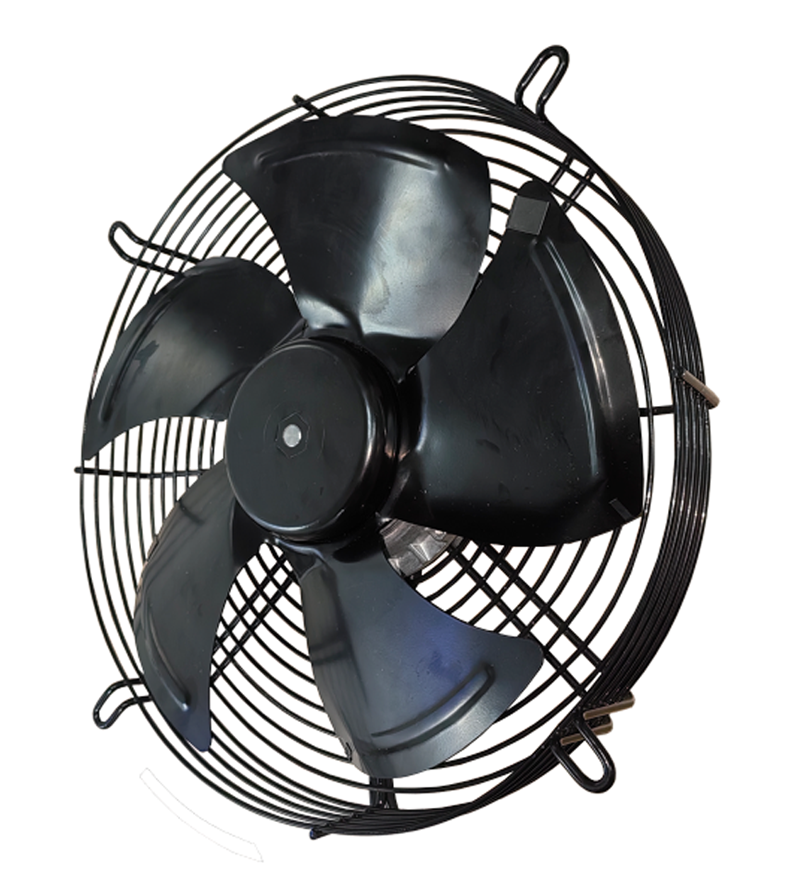
YUTEC 115VAC 230VAC 350mm 92 motor axial fan with medium speed
- Fan model: YUTEC-A350EC92-115M-VG-G02; YUTEC-A350EC92-230M-VG-G02
- Rated Voltage: 115VAC;230VAC
- Rated Current: 2.5A; 1.25A
- Rated Power: 165W
- Rated Speed: 1600RPM
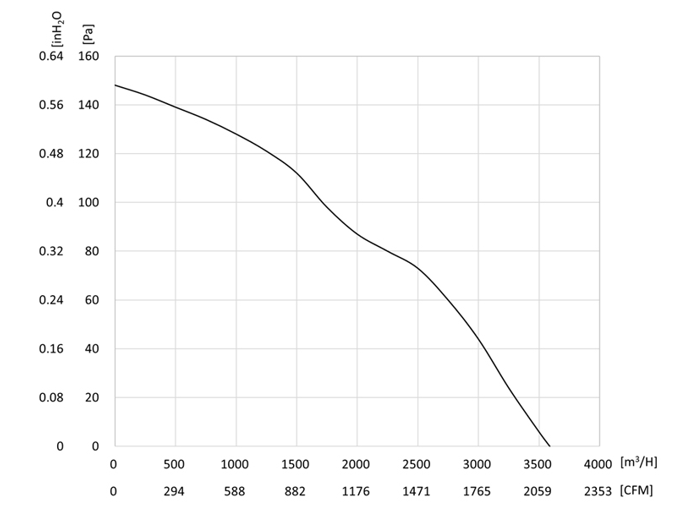
- Air Flow: 3590M3/H
- Air Pressure: 148Pa
- Noise Level:63dBA
- Frequency: 50/60 Hz
- Weight:2.4KG
- Brand: YUTEC
Description
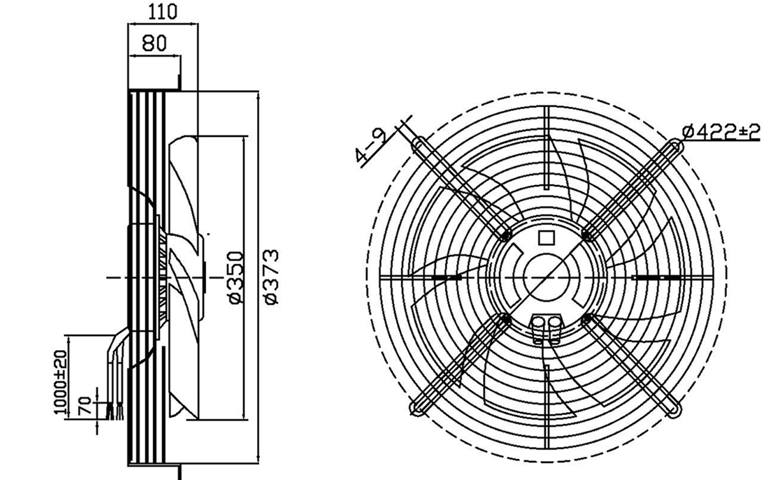
Dimensional drawing:
Performance Curve:
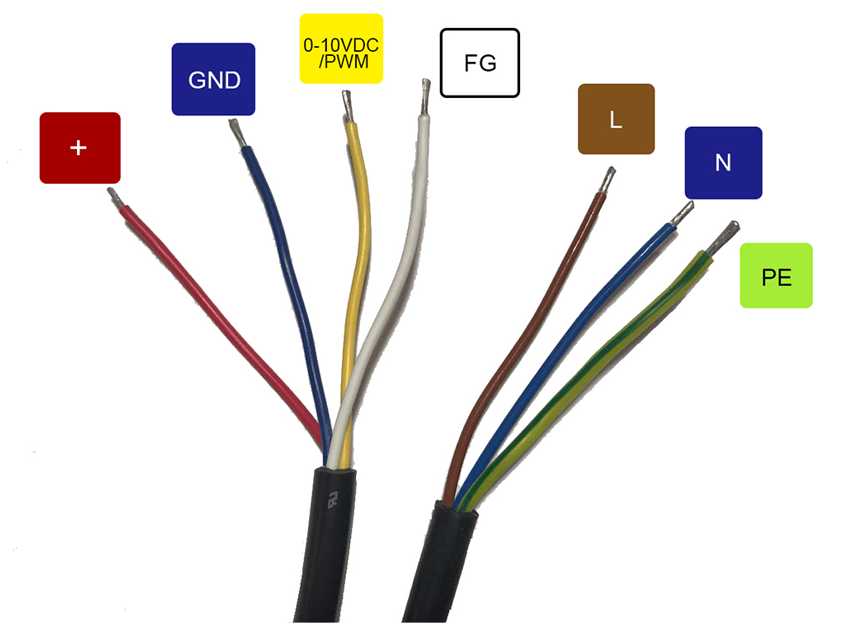
Connection Diagram:
Description:
In industrial settings, EC axial fans are used for equipment cooling, ventilation, and exhaust systems. Their high airflow capacity and energy efficiency make them ideal for maintaining optimal operating conditions in manufacturing plants, data centers, and other industrial facilities. In transportation, EC axial fans are employed in aircraft, trains, and ships for ventilation and air conditioning systems, providing passengers with a comfortable travel environment. The fans' ability to withstand harsh conditions and operate reliably under varying loads makes them a preferred choice in these applications.
Specifications:
Brand Name | YUTEC |
Impeller Material | Galvanized Metal Sheet |
Motor Type | BLDC External Rotor Motor |
Type of Protection | IP44 |
Insulation Class | Class B |
Speed Control | 0-10VDC/PWM |
Bearing | Ball Bearing |
Signal Output | FG |
Life Expectance | 50,000 Hours |
Electrical Protection | Locked Rotor Protection |
Reverse Polarity Protection | |
Over Voltage Protection | |
Soft Start |
Competitive Advantage:
1. Reduced Electrical Harmonics
EC axial fans produce lower electrical harmonics compared to traditional AC fans. Harmonics can cause interference with other electrical equipment and lead to increased energy losses. By minimizing harmonic distortion, EC axial fans contribute to a more stable and efficient electrical system, reducing the risk of equipment malfunctions and improving overall power quality.
2. Enhanced Safety Features
EC axial fans often come with built-in safety features, such as overcurrent protection, overvoltage protection, and thermal shutdown. These features protect the fan and the connected electrical system from damage due to electrical faults or overheating. They provide peace of mind to users, knowing that the fan is designed to operate safely under various conditions.