
Previous
Next
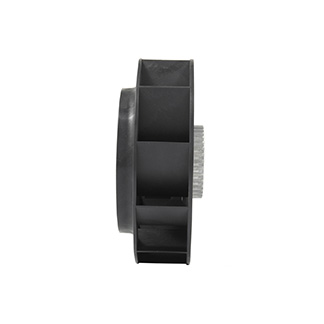
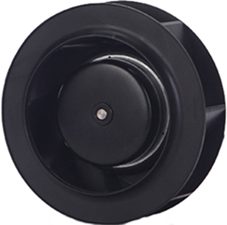
YUTEC 24VDC 48VDC 220mm 72motor high speed EC centrifugal fan
- Fan model: YUTEC-B220DC72-024H-P02; YUTEC-B220DC72-048H-P02
- Rated Voltage: 024VDC;048VDC
- Rated Current: 4.25A;2.13A
- Rated Power: 102W
- Rated Speed: 3000RPM
- Air Flow: 1100M3/H
- Air Pressure: 580Pa
- Noise Level:71dBA
- Frequency: 50/60 Hz
- Weight:1.1KG
- Brand: YUTEC
Description
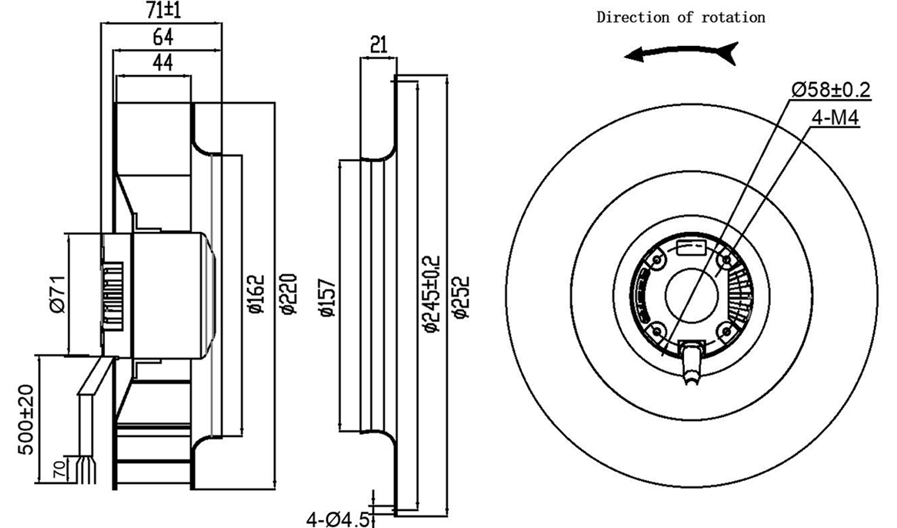
Dimensional drawing:
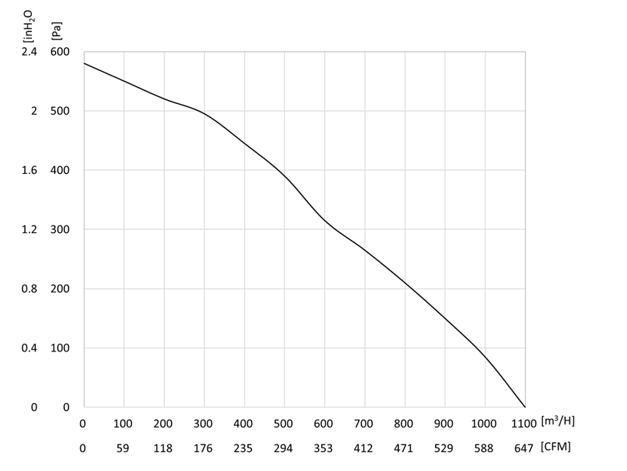
Performance Curve:
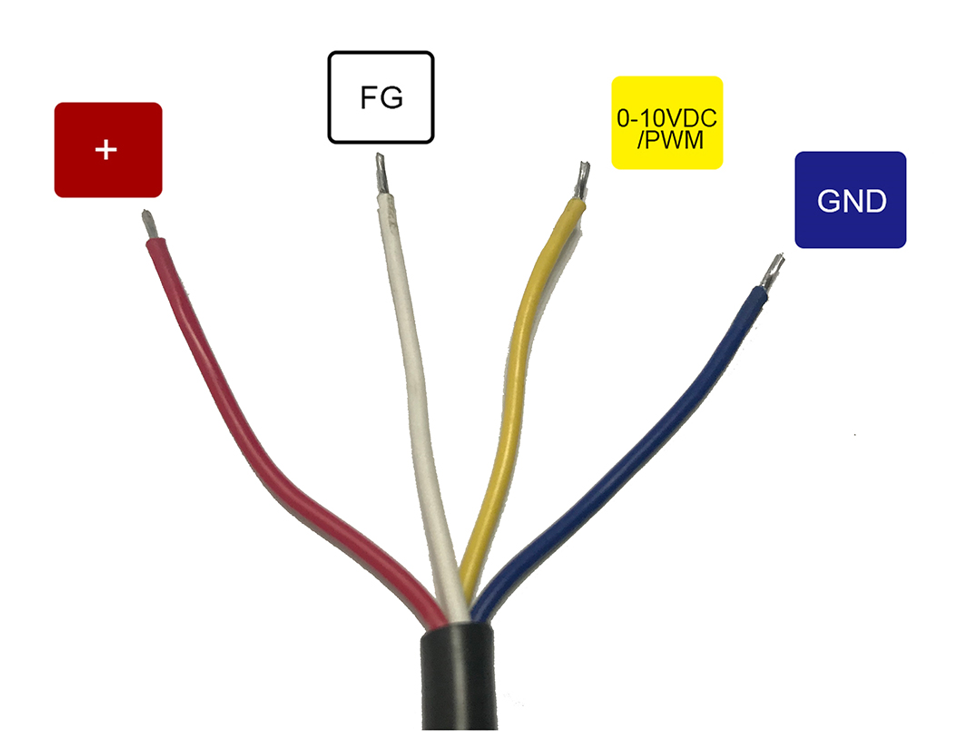
Connection Diagram:
Description:
A typical backward-curved centrifugal fan consists of four primary components: the impeller, housing, inlet, and outlet. The impeller, with its backward-curved blades, is the heart of the fan, converting rotational energy from a motor into airflow. The housing, often volute-shaped, guides the discharged air efficiently while minimizing pressure losses. The inlet and outlet are designed to ensure smooth airflow entry and exit, reducing turbulence and noise. The fan’s operation relies on the principle of centrifugal force: as the impeller rotates, air is drawn axially into the eye of the impeller, accelerated radially outward by the blades, and discharged at higher pressure through the outlet. This design ensures a compact footprint while delivering robust performance.
Specifications:
Brand Name | YUTEC |
Impeller Material | PA66+GF25 |
Motor Type | BLDC External Rotor Motor |
Type of Protection | IP44 |
Insulation Class | Class B |
Speed Control | 0-10VDC/PWM |
Bearing | Ball Bearing |
Signal Output | FG |
Life Expectance | 50,000 Hours |
Electrical Protection | Locked Rotor Protection |
Reverse Polarity Protection | |
Over Voltage Protection | |
Soft Start |
Competitive Advantage:
The superior efficiency of backward-curved fans directly reduces electricity consumption. In large-scale applications like commercial buildings or industrial processes, this translates to substantial operational cost savings. Over the fan’s lifespan, energy savings often outweigh the initial purchase premium, making them a cost-effective choice for long-term investments. Additionally, their alignment with energy efficiency standards supports sustainability goals.