
Previous
Next
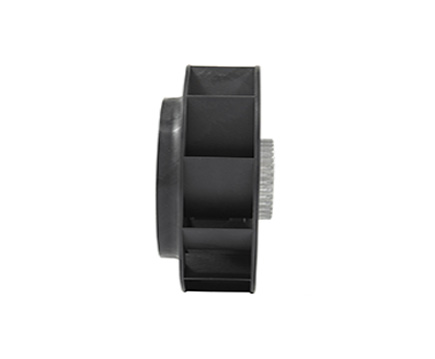
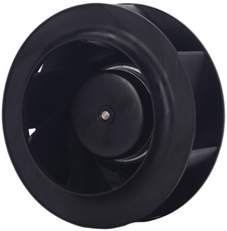
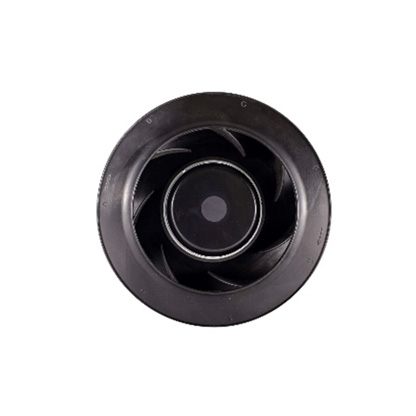
YUTEC 24VDC 48VDC 225mm 92motor Superhigh speed EC centrifugal fan
- Fan model: YUTEC-B225DC92-024E-P02; YUTEC-B225DC92-048E-P02
- Rated Voltage: 024VDC;048VDC
- Rated Current: 6.25A;3.12A
- Rated Power: 150W
- Rated Speed: 3000RPM
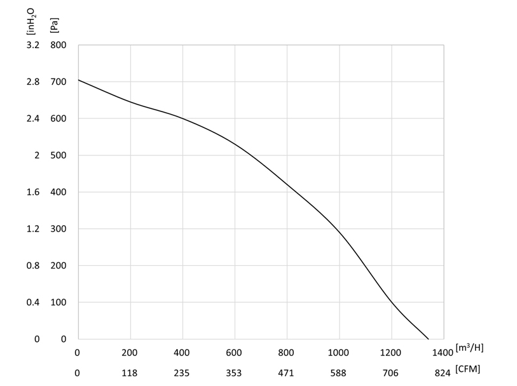
- Air Flow: 1340M3/H
- Air Pressure: 705Pa
- Noise Level:71dBA
- Frequency: 50/60 Hz
- Weight:1.45KG
- Brand: YUTEC
Description
Dimensional drawing:
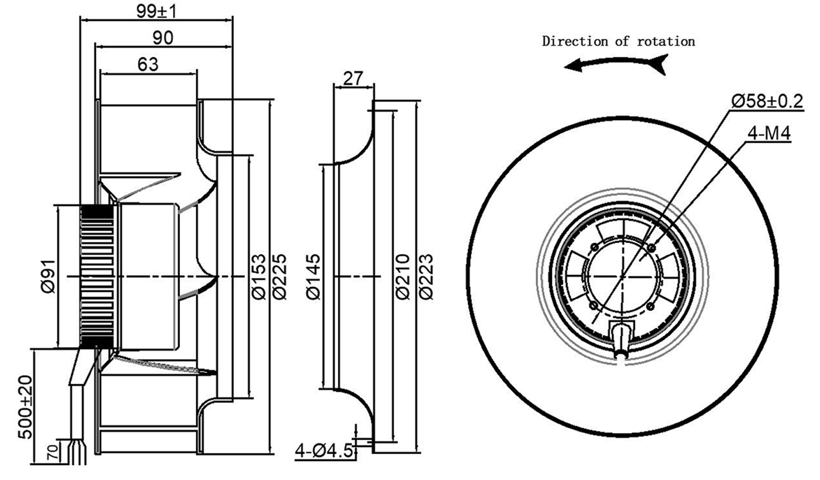
Performance Curve:
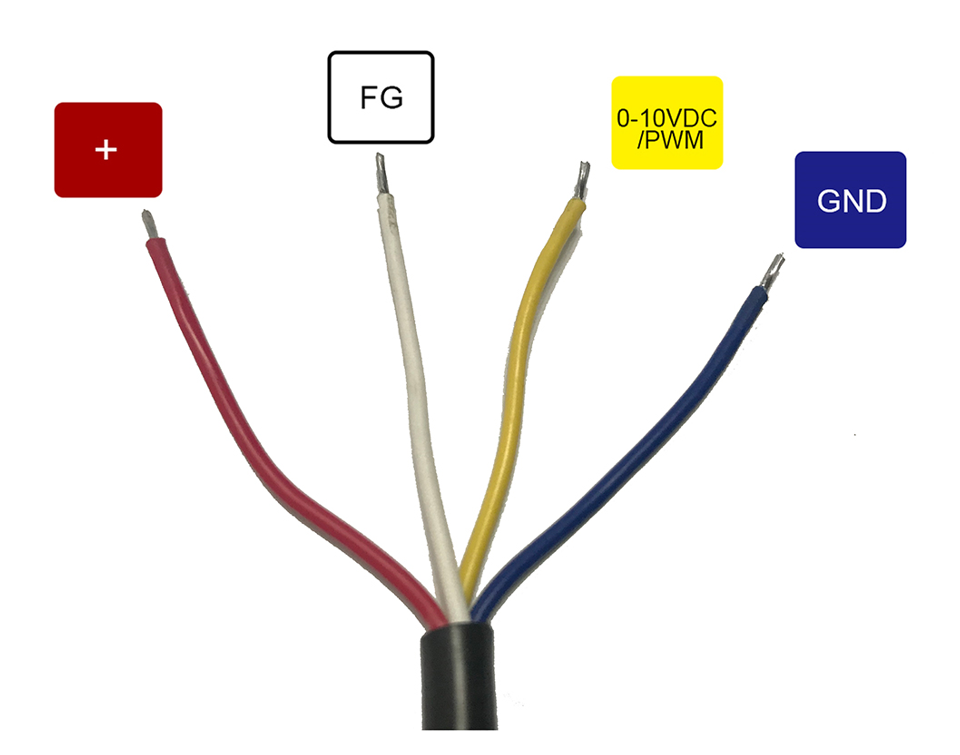
Connection Diagram:
Description:
The aerodynamic design of a backward-curved centrifugal fan centers on optimizing blade curvature to balance pressure generation and energy consumption. The blades are shaped such that their trailing edges curve backward relative to the direction of rotation. This curvature ensures that air exits the blades at a velocity closer to the blade tip speed, reducing kinetic energy losses that would otherwise occur if the air were ejected at higher speeds. The fan’s pressure-volume (P-Q) curve is steep, meaning a small reduction in flow rate results in a significant increase in pressure. This characteristic makes backward-curved fans suitable for applications requiring stable pressure output, such as pneumatic conveying or air handling units. Their design also minimizes noise and vibration, as the smoother airflow reduces turbulence-induced acoustic emissions.
Specifications:
Brand Name | YUTEC |
Impeller Material | PA66+GF25 |
Motor Type | BLDC External Rotor Motor |
Type of Protection | IP44 |
Insulation Class | Class B |
Speed Control | 0-10VDC/PWM |
Bearing | Ball Bearing |
Signal Output | FG |
Life Expectance | 50,000 Hours |
Electrical Protection | Locked Rotor Protection |
Reverse Polarity Protection | |
Over Voltage Protection | |
Soft Start |
Competitive Advantage:
The aerodynamic profile of backward-curved blades significantly reduces turbulence-induced noise. By directing airflow smoothly through the impeller, these fans minimize chaotic air movements that generate sound. Additionally, their design operates at lower rotational speeds compared to forward-curved alternatives, further reducing noise emissions. This makes backward-curved fans suitable for noise-sensitive environments such as offices, hospitals, and residential HVAC systems, where quiet operation is critical for user comfort and compliance with regulations.