
Previous
Next
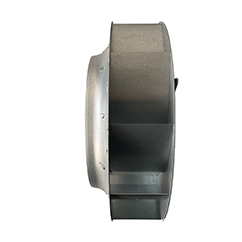
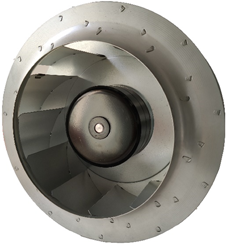
YUTEC 280mm 102motor 380VAC centrifugal fan with high speed
- Fan model: YUTEC-B280EC102-380H-G02
- Rated Voltage: 380VAC
- Rated Current: 1.05A
- Rated Power: 385W
- Rated Speed: 2820RPM
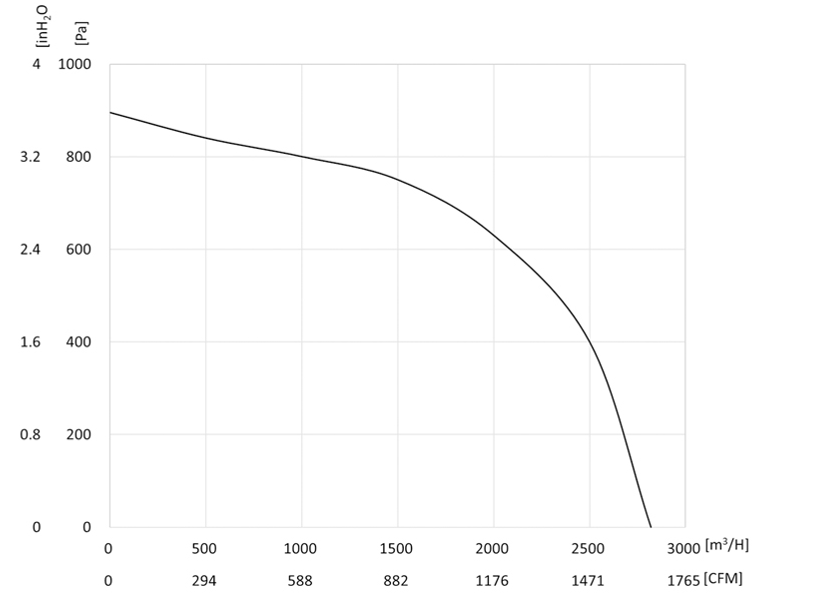
- Air Flow: 2820M3/H
- Air Pressure: 895Pa
- Noise Level:80dBA
- Frequency: 50/60Hz
- Brand: YUTEC
Description
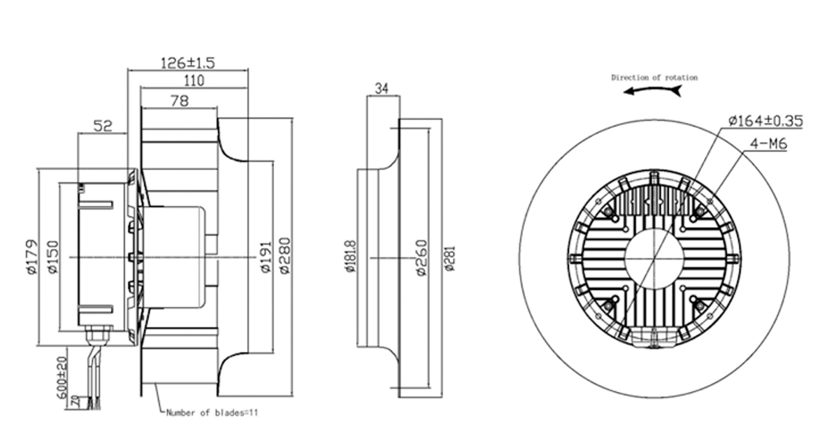
Dimensional drawing:
Performance Curve:
Connection Diagram:
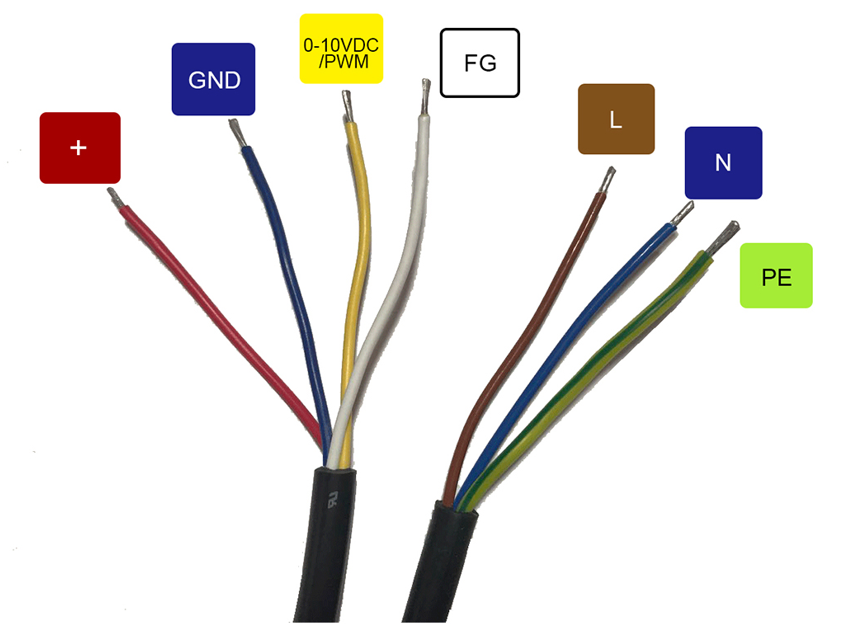
Description:
An EC (Electronically Commutated) fan is a ventilation device powered by an electronically commutated motor, combining the benefits of DC motors with advanced electronic control. Unlike traditional AC motors, EC fans use a permanent magnet synchronous motor with an integrated inverter, converting DC power into three-phase AC to achieve precise speed regulation. This design eliminates mechanical commutators, reducing energy losses and enhancing efficiency. The motor's rotor position is monitored electronically, allowing real-time adjustments to electrical phase and frequency for optimal performance.
Specifications:
Brand Name | YUTEC |
Impeller Material | Galvanized Metal Sheet |
Motor Type | BLDC External Rotor Motor |
Type of Protection | IP44 |
Insulation Class | Class B |
Speed Control | 0-10VDC/PWM |
Bearing | Ball Bearing |
Signal Output | FG |
Life Expectance | 50,000 Hours |
Electrical Protection | Locked Rotor Protection |
Reverse Polarity Protection | |
Over Voltage Protection | |
Soft Start |
Competitive Advantage:
1. High Energy Efficiency
EC fans achieve motor efficiencies exceeding 90% by using brushless DC technology, which eliminates energy losses from mechanical commutators and brushes. Traditional AC motors typically operate at 60–70% efficiency, making EC fans up to 50% more energy-efficient. This efficiency is maintained across variable loads due to direct speed control, reducing "over-sizing" energy waste. For instance, in HVAC systems, EC fans adjust airflow to match demand, avoiding the constant full-power operation of fixed-speed fans. Over time, this translates to significant electricity savings, lowering operational costs and carbon footprints. Their efficiency also complies with energy regulations like ErP 2021, avoiding penalties for non-compliance.
2. Precise Speed Control
EC fans offer 0–100% speed regulation via electronic controllers, enabling exact airflow adjustments. Unlike AC fans reliant on dampers or VFDs, EC fans adjust speed directly, maintaining efficiency across the range. This precision is critical in applications like cleanrooms, where airflow must meet stringent standards. For example, in data centers, EC fans dynamically respond to temperature changes, ensuring optimal cooling without over-ventilation. Their ability to fine-tune performance reduces energy waste and extends equipment lifespan by avoiding mechanical stress from abrupt speed changes.