
Previous
Next
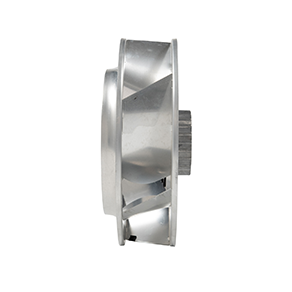
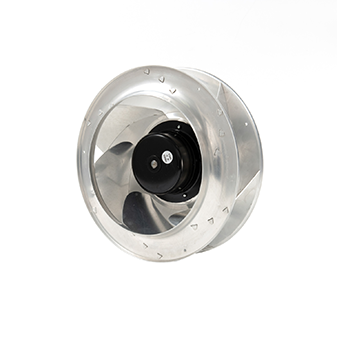
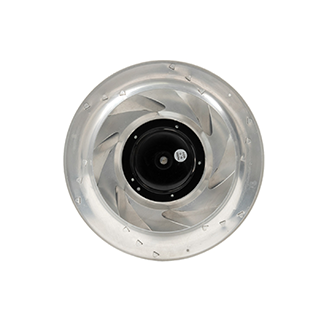
YUTEC 310mm 102motor backward curved centrifugal fan
- Fan model: YUTEC-B310EC102-115H-A02; YUTEC-B310EC102-230H-A02
- Rated Voltage: 115VAC;230VAC
- Rated Current: 2.84A;1.42A
- Rated Power: 325W
- Rated Speed: 2300RPM
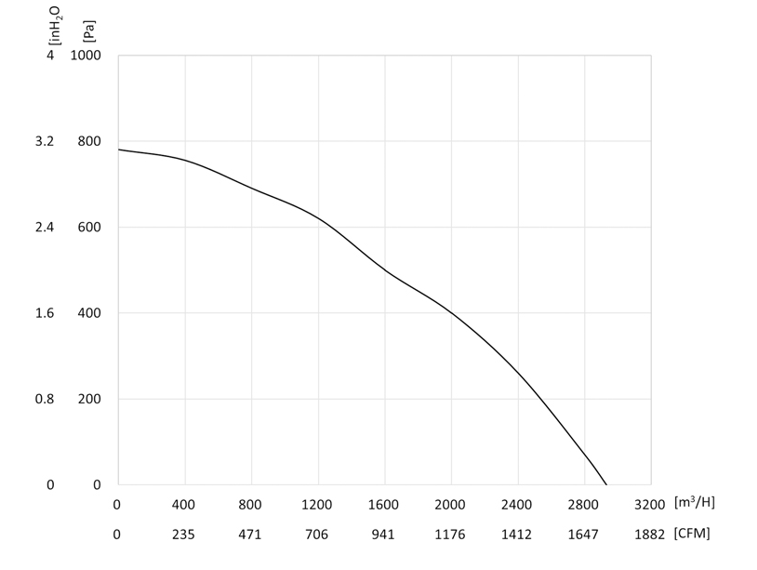
- Air Flow: 2930M3/H
- Air Pressure: 780Pa
- Noise Level:75dBA
- Frequency: 50/60Hz
- Weight: 4.6KG
- Brand: YUTEC
Description
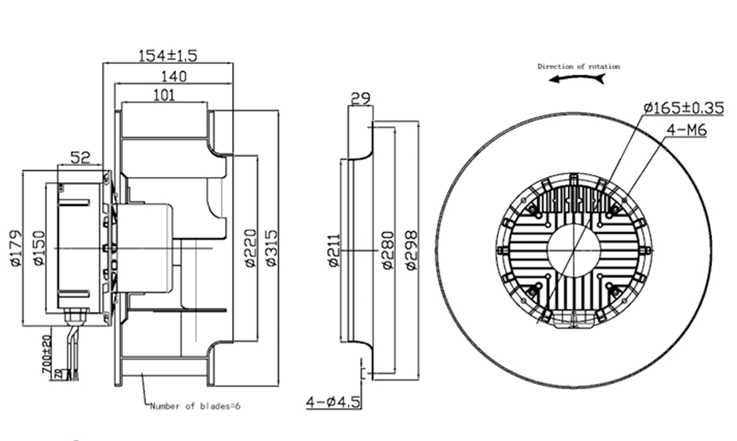
Dimensional drawing:
Performance Curve:
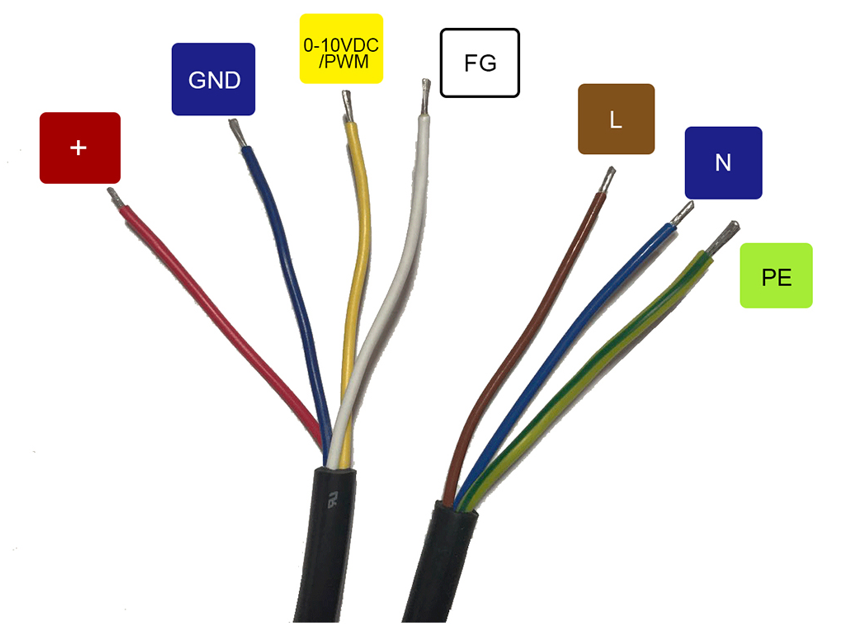
Connection Diagram:
Description:
Noise Reduction Strategies in EC Backward Curved Fans
Noise pollution is a critical concern in urban and indoor environments. EC backward curved fans achieve 60–75 dBA through:
Aerodynamic Optimization: Smooth blade curvature reduces turbulent airflow.
Vibration Damping: Rubber mounts and balanced impellers minimize structural noise.
Variable Speed: Lower RPMs during off-peak hours reduce noise.
Applications Benefiting:
Residential HVAC: Quiet operation for apartments and condos.
Educational Facilities: Libraries and classrooms require <65 dBA.
Hospitality: Hotels prioritize guest comfort with silent ventilation.
Test Result: A hotel in Dubai reduced fan noise from 72 dBA to 64 dBA by switching to EC backward curved models, improving guest satisfaction scores.
Specifications:
Brand Name | YUTEC |
Impeller Material | Aluminum Alloy Sheet |
Motor Type | BLDC External Rotor Motor |
Type of Protection | IP44 |
Insulation Class | Class B |
Speed Control | 0-10VDC/PWM |
Bearing | Ball Bearing |
Signal Output | FG |
Life Expectance | 50,000 Hours |
Electrical Protection | Locked Rotor Protection |
Reverse Polarity Protection | |
Over Voltage Protection | |
Soft Start |
Competitive Advantage:
1. Energy Efficiency
EC backward curved centrifugal fans leverage electronically commutated (EC) motors, which optimize energy use by adjusting speed dynamically. Unlike traditional AC motors, they eliminate wasted energy in partial-load conditions, reducing power consumption by up to 30%. Their backward curved blades further enhance efficiency by minimizing air turbulence, ensuring smooth airflow with minimal friction. This combination of motor technology and blade design makes them ideal for applications requiring continuous operation, such as HVAC systems, where energy savings directly translate to lower operational costs and environmental impact.
2. Variable Speed Control
EC motors enable precise speed adjustment via integrated controllers, allowing these fans to match airflow demands in real time. This adaptability prevents over-ventilation, a common issue with fixed-speed fans, and ensures optimal performance across varying loads. For example, in data centers, where cooling needs fluctuate with server usage, EC fans maintain stable temperatures while minimizing energy waste. Their ability to ramp up or down smoothly also reduces mechanical stress, extending equipment lifespan.