
Previous
Next
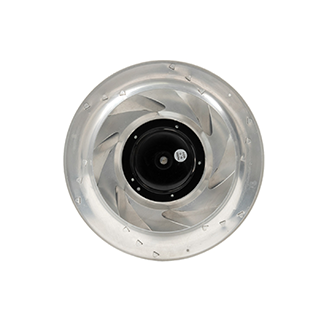
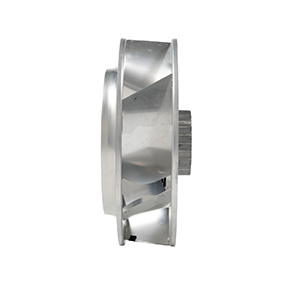
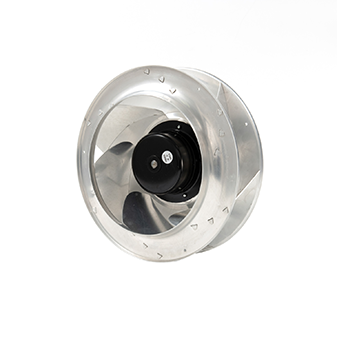
YUTEC 310mm 102motor high speed backward curved centrifugal fan
- Fan model: YUTEC-B310EC102E-115U-A02; YUTEC-B310EC102E-230U-A02
- Rated Voltage: 115VAC;230VAC
- Rated Current: 3.4A;1.7A
- Rated Power: 390W
- Rated Speed: 2620RPM
- Air Flow: 2800M3/H
- Air Pressure: 1050Pa
- Noise Level:78dBA
- Frequency: 50/60Hz
- Weight: 4.4KG
- Brand: YUTEC
Description
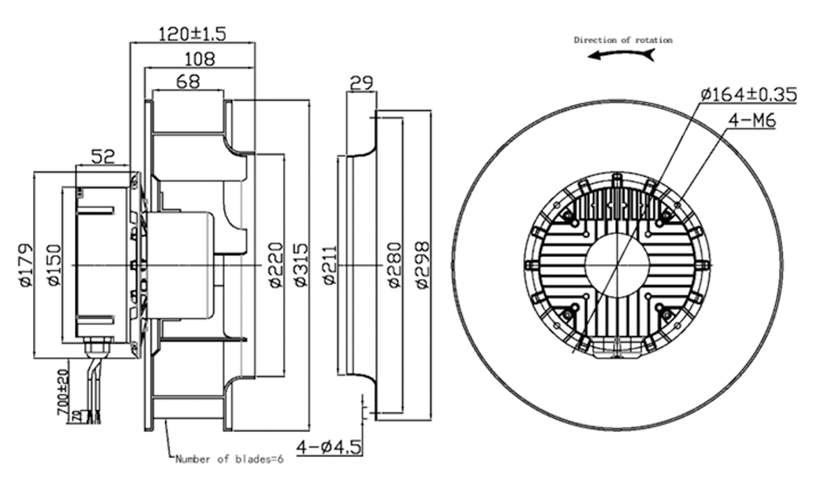
Dimensional drawing:
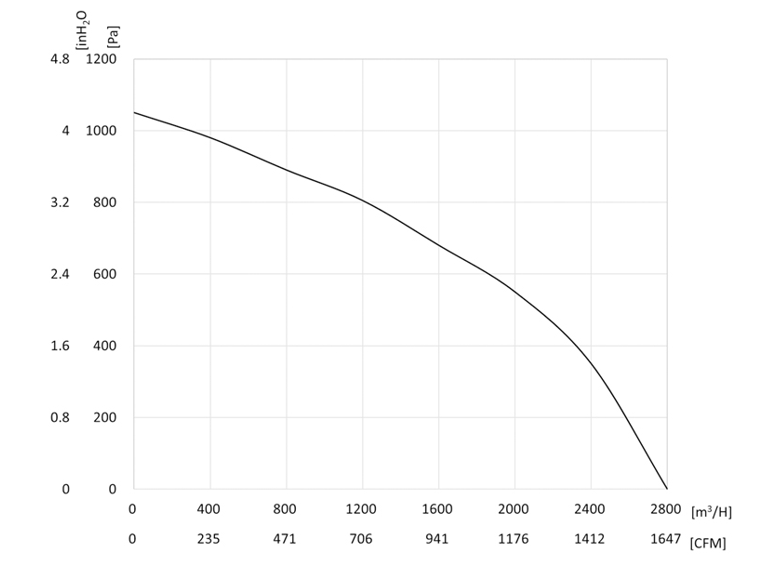
Performance Curve:
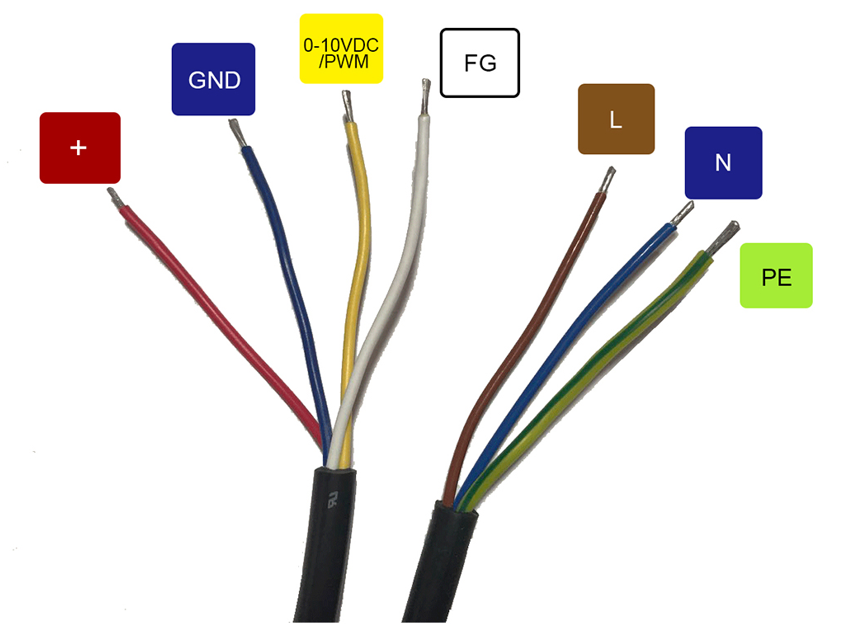
Connection Diagram:
Description:
Maintenance Best Practices for EC Backward Curved Centrifugal Fans
While EC backward curved fans require less maintenance than AC models, proactive care ensures peak performance:
Monthly Checks: Verify motor temperature (<80°C) and listen for unusual vibrations.
Quarterly Filter Replacement: Clean or replace filters to prevent pressure drops.
Annual Inspection: Lubricate bearings (if applicable) and test IoT sensors.
Common Issues & Solutions:
Overheating: Check for blocked inlets or motor faults.
Reduced Airflow: Clean impeller blades or adjust speed settings.
Motor Failure: Replace with OEM-certified EC motors.
Cost-Saving Tip: Predictive maintenance via IoT reduces downtime by 60% compared to reactive repairs.
Specifications:
Brand Name | YUTEC |
Impeller Material | Aluminum Alloy Sheet |
Motor Type | BLDC External Rotor Motor |
Type of Protection | IP44 |
Insulation Class | Class B |
Speed Control | 0-10VDC/PWM |
Bearing | Ball Bearing |
Signal Output | FG |
Life Expectance | 50,000 Hours |
Electrical Protection | Locked Rotor Protection |
Reverse Polarity Protection | |
Over Voltage Protection | |
Soft Start |
Competitive Advantage:
1. Low Noise Operation
The aerodynamic design of backward curved blades reduces turbulence and vibrations, resulting in quieter operation compared to forward-curved alternatives. EC motors further lower noise by eliminating the hum associated with AC induction motors, especially at lower speeds. This makes EC backward curved fans suitable for noise-sensitive environments like hospitals, offices, and residential buildings, where comfort and acoustic performance are critical.
2. Compact Design
These fans combine high airflow capacity with a compact footprint, thanks to their efficient blade geometry and EC motor integration. Their slim profile allows installation in tight spaces, such as ceiling voids or machinery enclosures, without compromising performance. This space-saving benefit is particularly valuable in retrofit projects or systems with strict dimensional constraints.